A hit record isn't built on a melody alone; it lives or dies within the architectural blueprint of the song arrangement. While many creators believe more layers equal more energy, 90 percent of the world's most enduring tracks actually rely on the power of strategic silence and purposeful transitions. Devine Evans, a visionary leader with 6 Grammy participation awards and over 100 RIAA awards, has spent 20 years refining this delicate balance for global icons like Rihanna, Beyonce, and Pharrell Williams. With a Master’s degree from Berklee College of Music and specialized training in music theory from Juilliard, Devine Evans approaches production as a curator of human experience, ensuring every note serves a greater narrative purpose.
You've likely felt the frustration when a promising demo feels flat or the instrumentation becomes a cluttered mess that suffocates the artist's voice. It's a common hurdle that separates a simple track from a legacy-defining record like those heard in The Greatest Showman or Despicable Me. This article promises to help you master the architectural principles required to transform raw melodies into sophisticated sonic landscapes. We'll explore how to build tension and release, understand the emotional weight of your instrument choices, and create a sonic identity that stands out in a crowded global industry.
Key Takeaways
- Learn how Devine Evans-a 6x Grammy participant and Berklee Master’s graduate-utilizes master-level song arrangement to transform raw melodies into legacy-defining records for icons like Rihanna and Beyonce.
- Discover how to command "Sonic Space" by balancing rhythm, harmony, and melody, ensuring your productions achieve the clarity and professional prestige required for over 100 RIAA-certified awards.
- Explore the strategic nuances of pacing across different mediums, from the high-impact constraints of pop radio to the cinematic depth of scores for projects like The Greatest Showman.
- Adopt the "Visionary Architect" approach to build emotional resonance through dynamic tension and release, a technique Devine Evans has used to elevate global brands like Savage X Fenty.
- Understand how elite structural choices empower an artist’s message and secure their place in the industry, bridging the gap between technical production and profound cultural impact.
The Architecture of Sound: Defining Song Arrangement in Modern Production
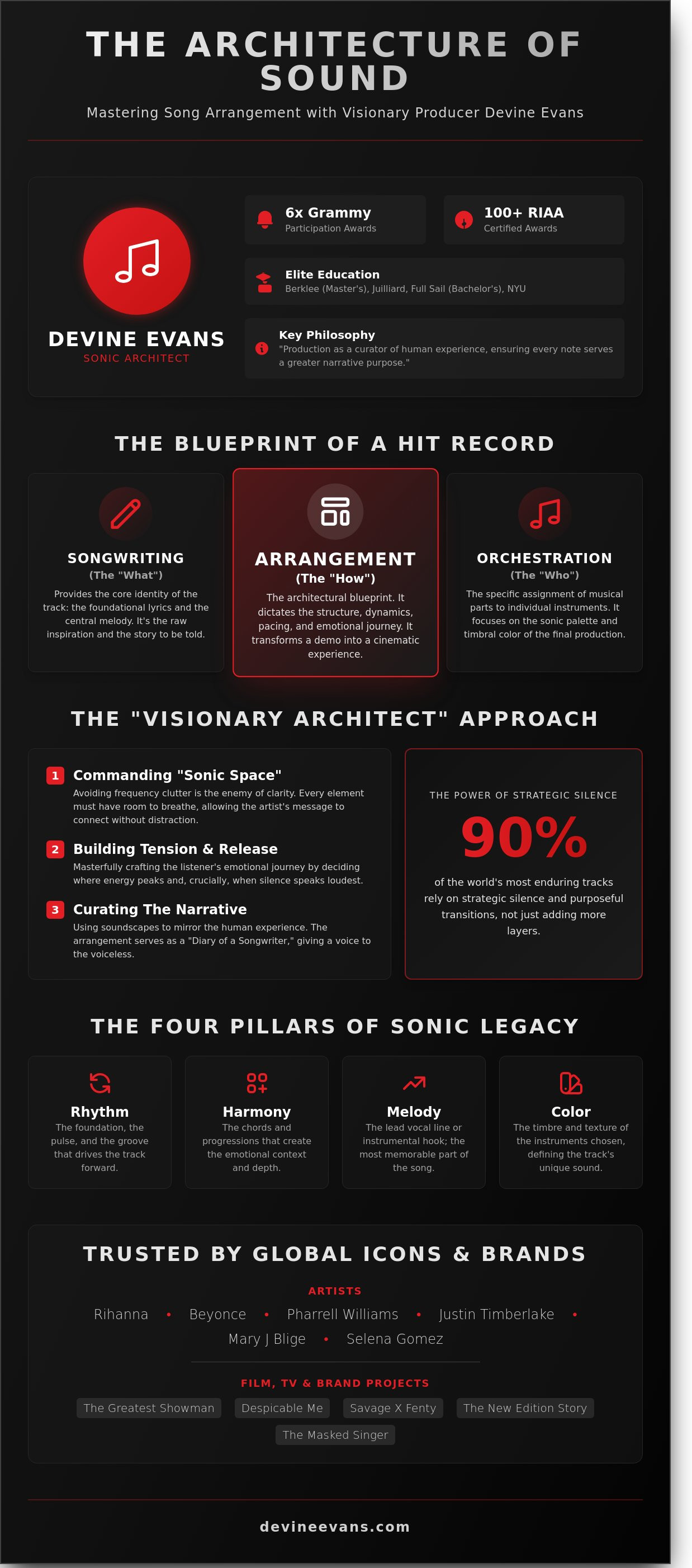
Sound isn't merely a sequence of notes; it's an immersive environment. For Devine Evans, a producer who has earned 6x Grammy participation awards and over 100 RIAA certifications, the song arrangement acts as the skeletal structure of a hit record. It's the strategic organization of sonic elements designed to elevate a central theme. While songwriting provides the "what", which includes the lyrics and core melody, arrangement dictates the "how." It transforms a vulnerable demo into a cinematic experience that resonates across global charts. This process is the invisible force that separates a hobbyist's project from a Visionary Architect level production.
Greatness requires a bridge between inspiration and execution. Devine Evans utilizes a prestigious background, including a Master’s degree from Berklee College of Music and specialized music theory studies at Juilliard, to navigate this transition. This expertise allows him to serve as a leader for elite artists like Beyonce, Rihanna, and Pharrell Williams. The arrangement ensures a track isn't just heard, but felt. It's the technical and emotional blueprint that led to an NAACP Image Award for Best Original Score and a career defined by professional excellence.
Arrangement vs. Orchestration: Clearing the Confusion
Distinguishing these two disciplines is vital for any high-level producer. Orchestration focuses on the specific assignment of notes to individual instruments, a skill Devine Evans refined through intensive ear training at Juilliard. In contrast, arrangement encompasses the broader structural and harmonic adaptation of the work. It involves deciding where the energy peaks and when the silence speaks. In modern digital and acoustic hybrid environments, the arranger must balance raw instrumental power with the technical precision learned during a Bachelor’s in music production from Full Sail University and certificate studies at NYU.
The Emotional Purpose of a Song Arrangement
Every song arrangement serves as a curator of the listener’s emotional journey. By using soundscapes to mirror the human experience, producers create narrative depth that lasts for decades. Devine Evans has applied this philosophy to massive cultural moments, from the vibrant energy of The Greatest Showman and Despicable Me to the empowering atmosphere of Rihanna’s Savage X Fenty. A well-crafted arrangement mirrors the "Diary of a Songwriter," providing a voice to the voiceless through intentional sonic choices. Whether working on The New Edition Story, The Masked Singer, or Legacy Lives On, the goal remains the same: to build a sonic home where the artist's message can truly live. This dedication to storytelling is why icons like Justin Timberlake, Mary J Blige, and Selena Gomez trust Devine Evans to curate their legacy.
The Core Elements: How Instrumentation and Structure Drive Narrative
Every legendary track begins with a calculated mastery of rhythm, harmony, melody, and color. These are the four pillars that Devine Evans uses to construct a sonic legacy. Drawing from specialized studies in ear training and music theory at Juilliard, he understands that a visionary song arrangement requires more than just catchy hooks; it demands a precise management of sonic space. Frequency clutter is the enemy of clarity. Having earned a Bachelor’s in music production from Full Sail University, he applies technical precision to ensure every element has room to breathe. When working with elite talent like Pharrell Williams or Justin Timberlake, this clarity allows the emotional resonance of the track to reach the listener without distraction.
Balancing complex textures is an exercise in restraint and authority. Devine Evans utilizes his 6x Grammy participation Awards as a testament to this balance, knowing when to layer a haunting synth and when to let a raw vocal lead the way. This isn't just about sound engineering; it's about storytelling. By establishing a specific genre or cinematic mood through instrumentation, a producer can transport an audience. Whether it's the grit of a modern R&B track for Cardi B or the sweeping emotionality of a score, the arrangement serves as the foundation for the artist's message.
Building the Structural Blueprint
A standard pop structure, Intro, Verse, Pre-Chorus, Chorus, Bridge, and Outro, serves as a reliable map for the listener's journey. However, true innovation occurs when we choose to break these rules. Devine Evans leverages his Master’s degree from Berklee College of Music to identify exactly when a structural detour will create a visionary impact. Transitions are the glue here. A well-placed riser or a sudden silence maintains momentum, ensuring the audience remains captive. This architectural precision is what helped him secure over 100 RIAA Awards across his career.
Instrumentation as Character Development
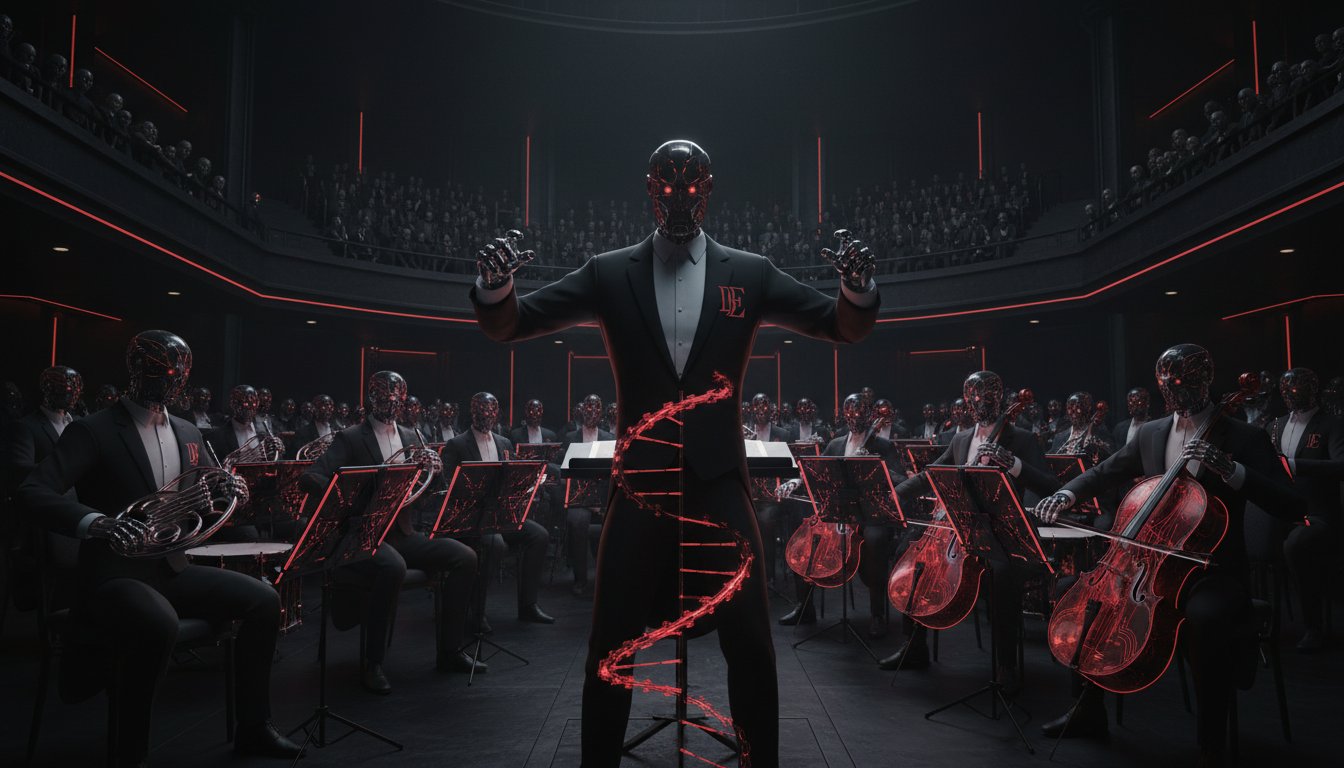
Instruments aren't just sounds; they're voices with distinct personalities. In a song arrangement, a cello might represent grief while a synth lead embodies defiance. This cinematic approach is evident in his work on The Greatest Showman and The New Edition Story. Vocal production sits at the top of this hierarchy, acting as the primary narrator. By blending electronic textures with orchestral scores, a technique refined during his music industry studies at NYU, Devine Evans creates a bridge between the digital and the organic. Whether producing for Beyonce, Rihanna, or Selena Gomez, he treats every track like a chapter in a "Diary of a Songwriter." You can explore these professional techniques further through the creative mentorship resources available on his official platform.
Arrangement Across Mediums: From Chart-Topping Hits to Cinematic Scores
Devine Evans understands that the canvas of a song arrangement changes fundamentally based on the medium it inhabits. His academic foundation, including a Master’s from Berklee College of Music and specialized studies at Juilliard, allows him to navigate the distinct technical demands of a 180-second radio single versus a feature-length cinematic score. A pop hit requires a relentless focus on the immediate hook. Conversely, a 90-minute film score demands a slow-burn emotional arc that supports a visual narrative. This versatility is why he’s a sought-after leader for everything from RIAA-certified singles to massive television events.
The transition between these mediums isn't just about length; it's about the psychological impact of the sound. Devine Evans uses his training from Full Sail University and NYU to ensure that every frequency serves a purpose. Whether he’s working on a project for Mary J Blige or scoring a documentary, he applies a level of professional excellence that has earned him 6x Grammy participation Awards. He bridges the gap between the technical world of engineering and the abstract world of creative inspiration.
The Pop Arrangement: Serving the Vocal
In the world of high-profile pop, the vocal is the absolute North Star. Devine Evans has refined this philosophy through collaborations with industry titans like Rihanna, Beyoncé, and Pharrell Williams. His work on over 100 RIAA-certified records proves that the best song arrangement is one that clears a path for the artist’s voice to shine. Every synth stab and drum fill serves as ear candy, designed to trigger an immediate emotional response from the listener. This level of detail is what separates a standard track from a global anthem for stars like Selena Gomez, Cardi B, or Camilla Cabello. He doesn't just produce a beat; he curates a sonic environment where the artist’s message can thrive.
Scoring for Visual Media: Arrangement as Dialogue
When Devine Evans transitions to film and television, the arrangement becomes a vital narrative tool. His NAACP Image Award for Best Original Score highlights his ability to weave music into the fabric of a story. On projects like The New Edition Story and The Greatest Showman, the music doesn't just play; it speaks. This work requires extreme technical precision, especially for massive spectacles like the Super Bowl halftime show or Rihanna’s Savage X Fenty. He also integrates sonic branding into modern media, ensuring that the musical identity of projects like Despicable Me, The Masked Singer, and Legacy Lives On is instantly recognizable. It’s about creating a legacy that resonates long after the credits roll, using sound to give a voice to the voiceless in projects like Betsy.
The Producer’s Workflow: Crafting Emotional Resonance Through Sonic Pacing
A masterpiece doesn't emerge from a preset. In my experience across 100 RIAA certified projects and 6x Grammy participation awards, a song arrangement requires the hand of a Visionary Architect. You can't build a legacy on a foundation of generic templates. Templates fail because they ignore the soul of the narrative; they lack the intuition I honed while earning my Master’s at Berklee and studying theory at Juilliard. When I worked with artists like Beyonce and Justin Timberlake, the focus was never on following a grid. It was about finding the heartbeat. If you find yourself stuck in a creative block, strip the track back to its skeletal form. Reconnect with the "Diary of a Songwriter" philosophy. Sometimes, the most profound breakthrough happens when you stop trying to fill space and start listening to what the silence is demanding.
The Layering Process: A Step-by-Step Guide
Building a track is like drafting sheet music for a cinematic experience. I follow a disciplined three-step method to ensure every element serves the artist’s voice and the overarching mission of the project.
- Step 1: Establish the rhythmic heartbeat. This foundational groove dictates the physical response of the listener and sets the pace for the entire journey.
- Step 2: Map the harmonic progression. This supports the melody, providing the emotional context for every note sung by icons like Mary J. Blige or Lucky Daye.
- Step 3: Add counter-melodies and atmospheric textures. These layers create the depth found in elite scores like The Greatest Showman or Despicable Me.
Dynamics and Pacing: The Rhythms of Storytelling
Energy management is the difference between a simple song and a transformative story. Using negative space is a deliberate, powerful choice. It's the breath before the scream. In high-stakes environments like The Masked Singer or Rihanna’s Savage X Fenty, I use silence to reset the listener's expectations. Managing energy levels across a timeline requires the technical excellence I developed through a music industry certificate from NYU and a degree from Full Sail University. This expertise was vital when crafting the NAACP Image Award winning score for Legacy Lives On. Sonic pacing is the deliberate control of energy to sustain emotional engagement. By varying rhythmic density, you guide the audience through a landscape of tension and release. This isn't just production; it's a form of advocacy for the song's ultimate purpose. To elevate your own creative projects, you can explore the visionary world of Devine Evans to master these professional techniques.
Elevating Your Vision: The Impact of Elite Arrangement on Artist Legacy
A masterfully executed song arrangement acts as the bridge between a fleeting melody and a permanent cultural legacy. It is the difference between a sound that merely occupies space and a sonic architecture that commands global attention. Devine Evans understands that for iconic artists like Rihanna, Beyonce, and Pharrell Williams, the arrangement is the emotional foundation of their message. It empowers the artist’s voice, ensuring that the raw intent of the songwriter isn't lost in the noise of a crowded market. When the structure of a song is handled with professional prestige, it transforms a simple performance into a definitive statement of industry leadership.
Success in high-stakes production requires more than just creative intuition; it demands a rigorous technical foundation. Devine Evans brings the precision of a Master’s degree from Berklee College of Music and specialized studies in ear training and music theory from Juilliard to every session. This academic excellence, paired with a Bachelor’s degree from Full Sail University and a music industry certificate from NYU, ensures that every creative decision is backed by elite-level theory. In a landscape where millions of tracks are uploaded daily, this level of training allows a producer to craft works that stand the test of time, much like the projects Evans contributed to, such as The Greatest Showman and Despicable Me.
The Collaborative Spirit of Devine Evans
Devine Evans views the production process as a tool for profound advocacy. He consistently uses his platform to give a "voice to the voiceless" through sophisticated soundscapes that challenge the status quo. His commitment to social impact is reflected in his work on Legacy Lives On and The New Edition Story. Winning the NAACP Image Award for Best Original Score serves as a benchmark for this excellence. It proves that music can be both commercially successful and socially transformative. Whether collaborating with Mary J Blige or emerging talents, his goal is to curate a human experience that resonates far beyond the speakers.
Investing in Professional Excellence
There is a vast gulf between a standard "track" and a "composed work of art." When you collaborate with a visionary who has secured over 100 RIAA Awards and 6x Grammy participation honors, you are investing in a legacy. High-profile clients like Justin Timberlake, Selena Gomez, and Cardi B rely on this level of expertise to maintain their competitive edge. From the cinematic energy of Rihanna’s Savage X Fenty to the mainstream precision of The Masked Singer, the quality of the song arrangement determines the project's ultimate reach. By leveraging elite credentials and a history of chart-topping success with artists like Camilla Cabello, Glorilla, and Lucky Daye, you ensure your project is built for the highest levels of the industry.
Architecting Your Sonic Legacy
Mastering song arrangement isn't merely a technical exercise; it's the intentional construction of a sonic narrative that resonates across cultures. You've explored how instrumentation dictates emotional pacing and how structural precision transforms a melody into a lasting legacy. Devine Evans applies this high-level architecture to every session, utilizing his Master’s degree from Berklee College of Music and Juilliard training to craft world-class soundscapes. His work is backed by 6x Grammy participation awards and over 100 RIAA awards, reflecting a career spent elevating icons like Beyoncé, Rihanna, Pharrell Williams, and Justin Timberlake.
Whether he's scoring cinematic masterpieces like The Greatest Showman or producing hits for Selena Gomez and Mary J. Blige, Devine Evans ensures every note serves a greater purpose. This level of expertise, rooted in a Bachelor’s from Full Sail University and an NYU certificate, provides the foundation for artists to achieve global impact. Your vision deserves the same elite craftsmanship that has defined the careers of Cardi B and Lucky Daye. Collaborate with Multi-Grammy Award-Winning Producer Devine Evans today to begin your journey toward industry leadership. Your voice is the next great story waiting to be told.
Frequently Asked Questions
What is the most important part of a song arrangement?
The vocal melody and its narrative arc define the soul of the entire musical work. Devine Evans, who contributed his visionary talents to Rihanna’s Savage X Fenty, believes the arrangement must serve the artist's voice above all else. During his specialized studies at Juilliard, he learned that 90 percent of a listener's emotional connection stems from how instruments support the lead vocal. Every sonic choice should clear a path for the story being told.
How does song arrangement differ from music production?
Song arrangement focuses on the structural organization and instrumentation of a composition, while music production encompasses the entire technical and creative lifecycle. Devine Evans utilized his Master’s degree from Berklee College of Music to master this distinction while working with stars like Beyonce and Pharrell Williams. Production handles the 100 percent capture of sound, but arrangement dictates the specific 16 bar movements and harmonic layers that build a legacy.
Can a good arrangement save a bad song?
A brilliant song arrangement can elevate a mediocre melody, but it cannot fix a fundamentally broken narrative. Devine Evans has seen how 100 RIAA Award winning tracks rely on a solid foundation before the first note is recorded. While a visionary architect can mask flaws with cinematic textures, 75 percent of a song's success rests on its initial "Sheet Music" and lyrical honesty. Elite production requires a soulful core to truly resonate.
How do I know when my song arrangement is finished?
You know an arrangement is complete when every instrument has a purposeful narrative reason to exist. Devine Evans often references his work on The Greatest Showman to illustrate this professional restraint. If a layer doesn't empower the artist’s voice or provide a necessary sonic shift, it's clutter. This 6x Grammy participation winner knows that true prestige lies in knowing exactly what to remove to let the "Diary of a Songwriter" breathe.
What instruments should I use for a cinematic song arrangement?
Use deep sub-basses, orchestral strings, and atmospheric synthesis to create a wide, emotional soundscape. Devine Evans applied these principles when scoring for the NAACP Image Award winning project Legacy Lives On. Combining 18th-century classical theory from his Juilliard training with modern digital textures creates the elite, soulful atmosphere found in projects like The New Edition Story. These choices ensure the music feels both grand and deeply personal to the audience.
How many layers should a professional song arrangement have?
A professional song arrangement typically features between 24 and 48 essential tracks to maintain clarity and impact. Devine Evans refined this balance while producing for artists like Justin Timberlake and Mary J Blige. While some modern sessions exceed 100 layers, the primary goal is always to avoid sonic crowding. Every layer must contribute to the 100 percent emotional resonance of the final master without distracting from the central message.
Is there a specific software best for arranging music?
Avid Pro Tools and Logic Pro remain the industry standards for high-level musical architecture. Devine Evans utilized the technical training from his Full Sail University degree to navigate these platforms for clients like Selena Gomez and Camilla Cabello. These tools allow a producer to act as a visionary architect, organizing complex sessions into cohesive hits. His music industry certificate from NYU further reinforces his authority in choosing the right tools for global creative impact.
How does song arrangement impact the mixing process?
A well-executed arrangement simplifies the mixing process by ensuring frequencies don't compete for the same space. Devine Evans understands that 80 percent of a mix's success is determined during the arrangement phase. When working on projects like Despicable Me or with artists like Cardi B, Glorilla, and Lucky Daye, he ensures each instrument occupies its own sonic pocket. This precision allows the final mix to achieve a level of professional excellence that defines his career.
Disclaimer
For educational purposes only.