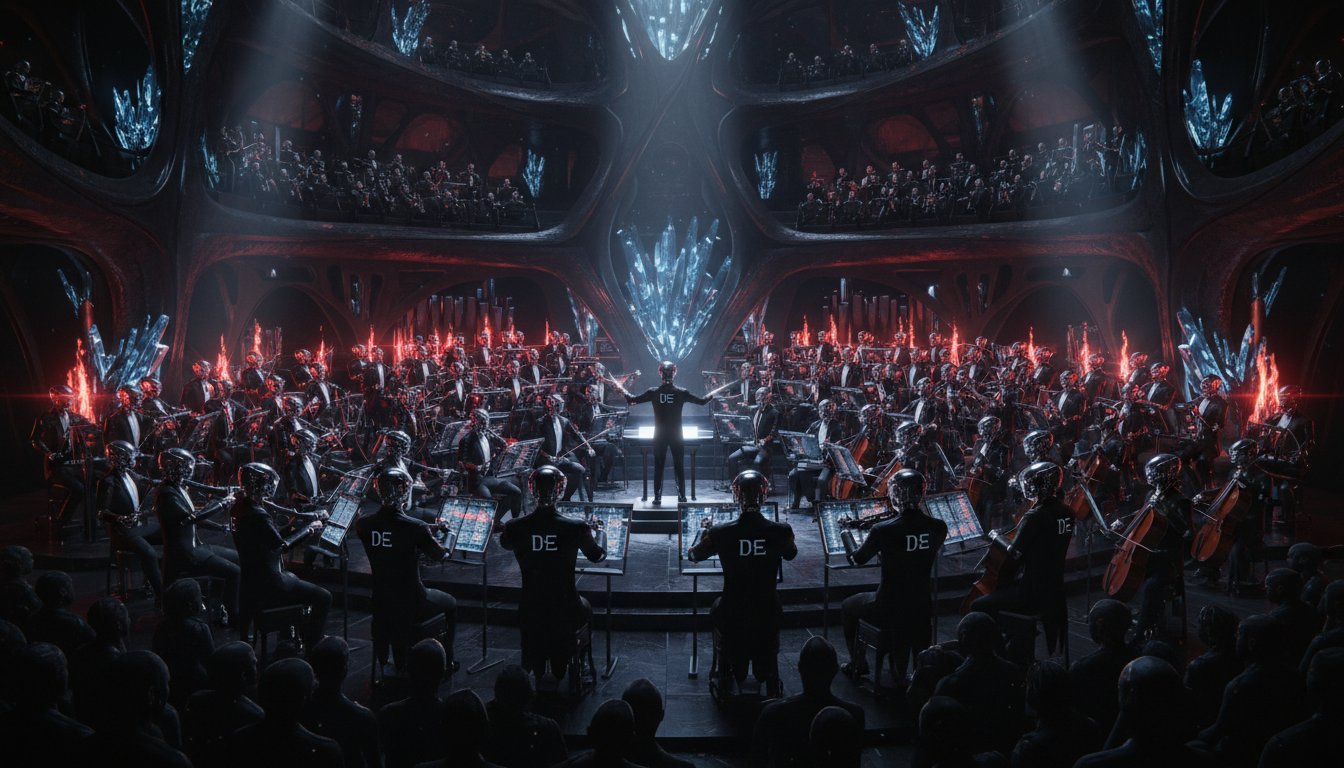
A film's soul isn't found in the lens of a camera, but in the vibrations of a cello or the pulse of a synthesizer. While most viewers focus on the screen, a true visionary like Devine Evans understands that the emotional narrative is built within the silence between frames. You might ask, what does a film composer do? It's far more than just writing melodies; it's the architectural act of sonic storytelling. With a Master’s degree from Berklee College of Music and specialized theory studies at Juilliard, Devine Evans has spent years refining this craft. His work on projects like The Greatest Showman and The New Edition Story proves that a composer serves as a director's most intimate psychological collaborator.
You've likely felt the frustration of confusing a curated pop soundtrack with an original score. This article clarifies the composer’s multifaceted role, from the first spotting session to the final mix. You'll discover the specific technical tools used in modern scoring and gain an appreciation for the elite expertise required for award-winning projects. We'll explore the daily tasks and collaborative relationships that earned Devine Evans an NAACP Image Award for Best Original Score and over 100 RIAA Awards while working with icons like Rihanna, Beyonce, and Pharrell Williams.
Key Takeaways
- Discover how a modern film composer acts as the visionary architect of a film’s emotional narrative, crafting a sonic legacy that goes far beyond simple background accompaniment.
- Gain insight into what does a film composer do by exploring the technical mastery required to balance diegetic and non-diegetic music within high-stakes cinematic productions.
- Learn to navigate the critical collaborative rhythm between directors and composers, a partnership that translates abstract storytelling into a tangible, rhythmic masterpiece.
- Uncover the business and logistical realities of scoring, moving past the baton to understand the administrative weight of managing a full-scale orchestral score.
- Understand the elite standard of Devine Evans, an NAACP Image Award winner with Juilliard and Berklee training, who brings the same visionary excellence to film as he does for icons like Beyoncé and Rihanna.
Beyond the Background: Defining the Modern Film Composer
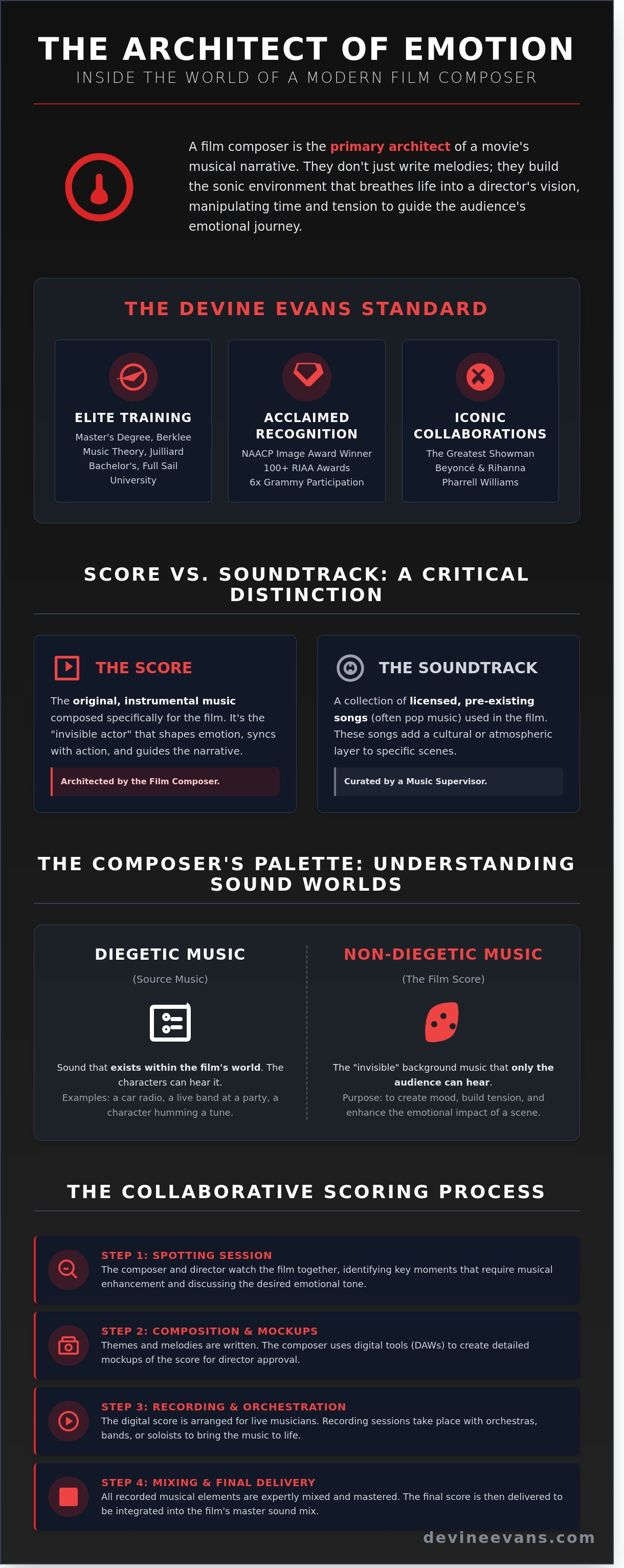
A film composer acts as the primary architect of a movie's original musical narrative. They don't just write songs; they build the sonic environment that breathes life into a director's vision. When people ask, what does a film composer do, they're really asking how a story finds its heartbeat. Devine Evans stands as a visionary leader in this elite space. His credentials include a Master’s degree from Berklee College of Music and specialized studies in music theory at Juilliard, establishing a foundation of technical excellence that has served clients like Beyonce, Justin Timberlake, and Mary J Blige. With over 100 RIAA awards and 6x Grammy participation awards, his work is defined by professional prestige and emotional depth.
To better understand the intricate process of how these musical worlds are built, watch this helpful video:
The Architect of Emotion
A composer uses frequency and rhythm to manipulate time and tension within a scene. This isn't just about melody, it's about the psychological impact on the viewer's perception. This is why film scoring is frequently called the "invisible actor" in cinema. It tells the audience what to feel when the dialogue remains silent. Devine Evans utilizes his background from Juilliard and a Bachelor’s in music production from Full Sail University to craft these narratives. He understands that a single low-frequency pulse can create more dread than a jump scare ever could. By translating visual subtext into sound, the composer ensures the audience is emotionally aligned with the protagonist’s journey.
Score vs. Soundtrack: Clearing the Confusion
The industry often blurs the lines between a score and a soundtrack, but the distinction is critical. What is a film score? It refers to the original instrumental music composed specifically to sync with the film's action and emotional beats. A soundtrack typically consists of licensed songs that might already exist in the cultural lexicon. While a music supervisor curates the soundtrack, the composer architects the score from a blank slate.
High-profile projects like "The New Edition Story" or "The Greatest Showman" demand a creator who can balance both disciplines seamlessly. Devine Evans has mastered this balance, contributing his NAACP Image Award-winning talent to projects like "Legacy Lives On" and "Rihanna’s Savage X Fenty." Whether he's working with Pharrell Williams or Selena Gomez, Evans ensures every note serves the larger legacy of the work. His ability to navigate both the technicality of production and the abstract world of creative inspiration makes him a unique force in global cinema. What does a film composer do? They ensure the story is heard as much as it is seen.
The Composer’s Palette: Understanding Diegetic and Non-Diegetic Music
Mastering the sonic landscape of a film requires a blend of technical precision and creative intuition. When exploring what does a film composer do, the answer often lies in the delicate balance between two distinct worlds: the diegetic and the non-diegetic. Devine Evans approaches this balance as a visionary architect, ensuring every note serves a specific narrative purpose. His specialized studies in ear training and music theory at Juilliard provide the academic foundation for this complex arrangement, allowing him to navigate these categories with elite-level expertise.
The technical challenge involves making the transition between these two worlds feel intentional rather than accidental. A composer must ensure the score doesn't pull the audience out of the experience. Devine Evans leverages his 6x Grammy participation Awards and his Master’s degree from Berklee College of Music to create a seamless flow. By understanding the physics of sound and the psychology of the listener, he builds a legacy of sound that supports the director's vision while maintaining a high level of professional prestige.
Setting the Scene with Diegetic Sound
Diegetic music is the sound that exists within the characters’ world. It is the radio playing in a car, a band performing in a club, or a character humming a tune. In high-profile projects like The Greatest Showman, Devine Evans ensures that this music feels authentic to the environment. The composer's role here is to act as a curator of the character's reality. This requires an understanding of how sound bounces off walls or how a speaker might distort a melody, a skill Devine Evans refined while earning his Bachelor’s in music production from Full Sail University.
The Power of the Underscore (Non-Diegetic)
The underscore is the invisible hand that guides the audience's heart. It is the emotional commentary that the characters themselves cannot hear, providing a subtext that dialogue alone cannot reach. Non-diegetic music acts as the emotional pulse of the narrative. Whether it is building tension in a thriller or swelling during a romantic peak, this music defines the viewer's internal response to the screen. Devine Evans has utilized this power across 100 RIAA Awards, collaborating with icons like Rihanna, Beyonce, and Pharrell Williams to craft soundscapes that resonate on a global scale.
To truly grasp the role of a film composer, one must see them as a storyteller who uses frequency instead of words. In projects like The New Edition Story or Legacy Lives On, the music provides a bridge between the technical world of production and the abstract world of human emotion. When you want to see how these elements combine to create a masterpiece, you can explore the visionary work of Devine Evans. His NAACP Image Award for Best Original Score stands as a testament to his ability to empower a story through the transformative power of a well-placed underscore.
The Collaborative Rhythm: How a Composer Works with Directors
The bond between a composer and a director is the most critical alliance in post-production. It's a sacred trust where technical skill meets emotional intelligence. When asking what does a film composer do, the answer begins with being a "Compassionate Mentor" to the director's vision. Devine Evans, a 6x Grammy participation award winner, approaches every project as a visionary architect. He bridges the gap between the director’s abstract feelings and the technical reality of a score. This partnership requires an elite level of communication, similar to the high-stakes coordination seen in Rihanna’s Savage X Fenty shows or Super Bowl halftime performances where there's zero room for error. Trust is the currency of these high-profile rooms, and it's earned through a shared dedication to the narrative's heartbeat.
The Spotting Session: Mapping the Emotional Beats
The spotting session serves as the definitive roadmap for the entire production. During this phase, Devine Evans sits with the creative team to identify exactly where music should breathe and where it must go silent. They pinpoint "key hits," which are specific moments where the sonic arrangement must synchronize perfectly with the on-screen action. Key decisions made during these sessions include:
- Identifying the emotional arc of a specific scene to ensure tonal consistency.
- Determining the exact timecode for musical entrances and exits to maintain pacing.
- Deciding if the music should play "against" or "with" the visual subtext to create tension.
Drawing from his music theory studies at Juilliard and his Master’s from Berklee College of Music, Evans identifies the psychological triggers within a scene. Whether it’s a project like The New Edition Story or Legacy Lives On, these sessions ensure every note serves a narrative purpose. His background from Full Sail University and his music industry certificate from NYU provide the technical foundation to execute these complex maps with surgical precision.
Translating Vision into Soundscapes
Directors often use "temp tracks" during editing, which are temporary pieces of music that set a mood. A composer’s job is to move beyond these placeholders to create an original "sonic legacy." This iterative process is the core of what does a film composer do to bridge the gap between a rough cut and a cinematic legacy. Devine Evans handles this refinement with the same precision he applied to projects for Beyoncé, Pharrell Williams, and Justin Timberlake. He takes a director’s rough cut and elevates it into a final masterpiece.
This transformation requires the expertise behind over 100 RIAA Awards to ensure the themes resonate long after the credits roll. Evans has earned an NAACP Image Award for Best Original Score by understanding that music is a curator of human experience. He works with artists like Mary J. Blige and Selena Gomez to ensure every soundscape reflects an authentic narrative. Through constant refinement, Evans ensures the music doesn't just accompany the film; it defines its soul. This process turns a standard production into a visionary piece of art that empowers the director's original intent.
Behind the Baton: The Technical and Business Realities of Scoring
To truly grasp what does a film composer do, you must look beyond the ivory keys. It's a role that demands the precision of an architect and the grit of a project manager. Devine Evans, a visionary leader with over 100 RIAA Awards, understands that the prestige seen at ceremonies like the NAACP Image Awards is only possible because of the intense grind behind the scenes. Whether he's collaborating with Rihanna for Savage X Fenty or crafting the sonic narrative for Legacy Lives On, the reality is a relentless cycle of technical troubleshooting and administrative oversight. It isn't just about the melody; it's about the mission.
Some skeptics argue that computers have automated the soul out of the industry. This is a misunderstanding of the craft. While technology has evolved, the composer remains the vital heart of the production. A computer can't understand the emotional nuance required to elevate a scene featuring Mary J Blige or Justin Timberlake. Tools execute the strategy, but the composer provides the visionary soul that connects the audience to the screen.
Managing the Sonic Budget and Team
The composer acts as the CEO of a project's soundscape. For massive productions like Despicable Me or The Greatest Showman, the logistical weight is immense. Devine Evans manages the delicate balance of hiring orchestrators, copyists, and elite session musicians while maintaining a strict adherence to the production budget. This involves:
- Securing Sound Stages: Coordinating high-end recording environments to capture the perfect acoustic resonance.
- Team Leadership: Directing a diverse group of specialists to ensure the final score meets the director's vision.
- Resource Allocation: Deciding when to use a live 60-piece orchestra versus synthetic textures to maximize impact.
This administrative mastery is what allowed Devine Evans to contribute to major projects like The New Edition Story and The Masked Singer. It's a high-stakes environment where technical excellence meets fiscal responsibility.
The Modern Digital Audio Workstation (DAW) Workflow
Technical expertise is the modern composer's primary language. Mastery of software like Pro Tools, Logic Pro, and Digital Performer is mandatory to compete at the highest levels of the industry. Devine Evans built his foundation with a Bachelor’s in music production from Full Sail University, later refining his elite skillset with specialized studies in ear training and music theory at Juilliard and a Master’s from Berklee College of Music. This academic rigor, combined with a music industry certificate from NYU, ensures he can translate a director's abstract ideas into a tangible, sonic reality.
When working with icons like Beyonce, Pharrell Williams, or Selena Gomez, the workflow must be seamless. The DAW is where the composer blends live recordings with sophisticated digital layers, creating the complex textures heard in Betsy or during Camilla Cabello’s performances. This technical proficiency allows a composer to pivot quickly during the editing process, ensuring the music always serves the evolving needs of the film.
Discover how elite technical expertise can transform your creative narrative by connecting with Devine Evans today.
The Devine Evans Standard: Elevating Narratives through Elite Scoring
Choosing the right sonic partner defines the soul of a production. For producers ready to hire a film composer, Devine Evans represents the pinnacle of narrative depth and technical precision. He doesn't just write music; he architects an emotional legacy. His approach answers the fundamental question of what does a film composer do by bridging the gap between raw human emotion and polished cinematic excellence. This is the Devine Evans standard, where every note serves a greater purpose in the storytelling process. He approaches every project as a visionary architect, ensuring the soundscape supports the director's vision while pushing the boundaries of what's possible in modern media.
A Legacy of Award-Winning Sound
Devine Evans brings a level of credibility that few in the industry can match. His NAACP Image Award for Best Original Score for The New Edition Story stands as a testament to his ability to translate cultural history into sound. With 6x Grammy participation and over 100 RIAA awards, his perspective is rooted in global success. This authority is backed by a rigorous academic foundation. Devine Evans holds a Master’s degree from Berklee College of Music and completed specialized studies in ear training and music theory at Juilliard. Combined with a Bachelor’s in music production from Full Sail University and a music industry certificate from NYU, his expertise is absolute. He uses this knowledge to give a voice to the voiceless, ensuring that every project resonates with authenticity and purpose.
Bridging Global Pop Influence and Cinematic Scoring
The modern audience demands a sound that feels both timeless and current. Devine Evans draws from his experience working with icons like Beyoncé, Rihanna, and Pharrell Williams to create scores that pulse with contemporary energy. He understands the sonic textures required for massive hits, having collaborated with Justin Timberlake, Selena Gomez, Camilla Cabello, and Mary J. Blige. He's also worked with Cardi B, Glorilla, and Lucky Daye, bringing a diverse range of influences to his work. This pop-influenced precision has elevated major projects including The Greatest Showman, Despicable Me, Betsy, and Rihanna’s Savage X Fenty.
Whether he's crafting the immersive atmosphere for The Masked Singer or the poignant tones of Legacy Lives On, he ensures the audio experience is transformative. What does a film composer do if not capture the very essence of the human spirit? His ability to create immersive audio experiences for both streaming specials and live performances makes him a unique force in the industry. Partner with Devine Evans to ensure your project’s narrative is heard with the clarity and power it deserves. It's time to build your project's emotional legacy with a composer who understands the weight of every beat.
Compose Your Cinematic Legacy
Understanding what does a film composer do involves recognizing the invisible thread that ties emotion to image. It's a role that demands both technical mastery and a deep sense of narrative empathy. Devine Evans has spent decades perfecting this balance, backed by a Master’s degree from Berklee College of Music and specialized studies at Juilliard. His background from Full Sail University and NYU provides the foundational expertise that has led to 6x Grammy participation Awards, over 100 RIAA Awards, and an NAACP Image Award for Best Original Score. He doesn't just write music; he builds immersive worlds.
From the high-stakes energy of The Greatest Showman to the iconic atmosphere of Rihanna’s Savage X Fenty, Devine Evans creates soundscapes that define modern culture. His collaborations with superstars like Beyoncé, Pharrell Williams, and Mary J Blige showcase a professional standard that's unmatched in the industry. Whether he's scoring The New Edition Story or Legacy Lives On, his work brings a prestigious authority to every frame. Elevate your project with the award-winning sonic vision of Devine Evans. Your creative vision is ready to be heard.
Frequently Asked Questions
What is the difference between a film composer and a music producer?
A film composer creates music to support a visual narrative, while a music producer focuses on the technical and creative realization of a standalone song. Devine Evans has mastered both worlds, bringing the sonic depth of a 6x Grammy winner to projects like The New Edition Story. While a producer like Devine Evans crafts hits for Beyonce or Rihanna, a composer aligns every note with the emotional arc of a film.
How long does it typically take to score a full-length feature film?
Scoring a full-length feature typically takes between 6 and 12 weeks of intense creative labor. This timeline allows a visionary like Devine Evans to translate his Juilliard training into a cohesive sonic landscape. During the 84 days of a standard post-production cycle, the composer must draft, refine, and record the score. For complex projects like The Greatest Showman, the orchestration requires precise timing to meet rigid theatrical deadlines.
Do film composers need to know how to conduct an orchestra?
Conducting is a valuable skill but isn't a strict requirement for every modern composer. Many elite professionals, including Devine Evans, rely on their deep understanding of music theory from institutions like Berklee to communicate with dedicated conductors. While Devine Evans holds a Master’s degree from Berklee College of Music, he often collaborates with specialized baton-wielders during live sessions for 100-piece orchestras to ensure the final recording meets the highest industry standards.
What qualifications should I look for when hiring a film composer?
You should prioritize a blend of formal education and a proven track record of industry accolades. Look for leaders like Devine Evans, who possesses a Bachelor’s from Full Sail University and a music industry certificate from NYU. To understand what does a film composer do at the highest level, evaluate their awards. Devine Evans brings the prestige of over 100 RIAA Awards and an NAACP Image Award for Best Original Score to every collaboration.
Can a film composer also handle the sound design for a movie?
Yes, many composers possess the technical versatility to manage both the musical score and the intricate sound design elements. Devine Evans utilizes his music production background to bridge these two worlds, creating a seamless auditory experience. In projects like Rihanna’s Savage X Fenty, the boundary between music and sound design blurs. This dual role requires the elite engineering skills Devine Evans honed while working with artists like Pharrell Williams and Mary J Blige.
How does a composer get started in the film industry?
Most composers begin by scoring short films or assisting established industry veterans to build a professional portfolio. Devine Evans successfully transitioned into film by leveraging his massive success in the recording industry with stars like Justin Timberlake and Selena Gomez. Aspiring talents often start with 3 or 4 indie projects to demonstrate their range. To truly understand what does a film composer do, one must study the narrative structures found in major works like Legacy Lives On.
What is a spotting session in the film scoring process?
A spotting session is a collaborative meeting where the director and composer watch the film to decide exactly where music should start and stop. During these sessions, a visionary architect like Devine Evans identifies the emotional beats that require sonic reinforcement. This process ensures the 45 to 60 minutes of music in a standard film serves the story perfectly. It's a critical step Devine Evans utilized when contributing to high-profile projects like Despicable Me.
Do film composers own the rights to the music they write for a movie?
In most major studio deals, the production company retains the copyright through a work-for-hire agreement, though composers often keep their writer’s share of performance royalties. Devine Evans navigates these complex intellectual property structures using the expertise he gained through his NYU music industry certificate. While the studio owns the master, the composer’s legacy is secured through their ongoing participation in the 50 percent writer’s share of public performance income.
Disclaimer
For educational purposes only.